BLOG
Cai Guoqing sang the theme song of "Little Dot in the Forbidden City" to help Poly Parent-Child Art Festival
Release time:2018-07-30
Recently, Cai Guoqing, a singer from the Song and Dance Ensemble of the Political Work Department of the Central Military Commission, was invited to join the Poly Parent-Child Art Festival to sing the theme song for the opening drama "The Little Dot in the Forbidden City. Yesterday, Cai Guoqing teacher with love son Cai Xuanzheng came to the studio for the theme song recording. During the recording process, Teacher Cai used his unique gentle voice to interact with Cai Xuanzheng's beautiful children's voice, injecting new vitality into the song.
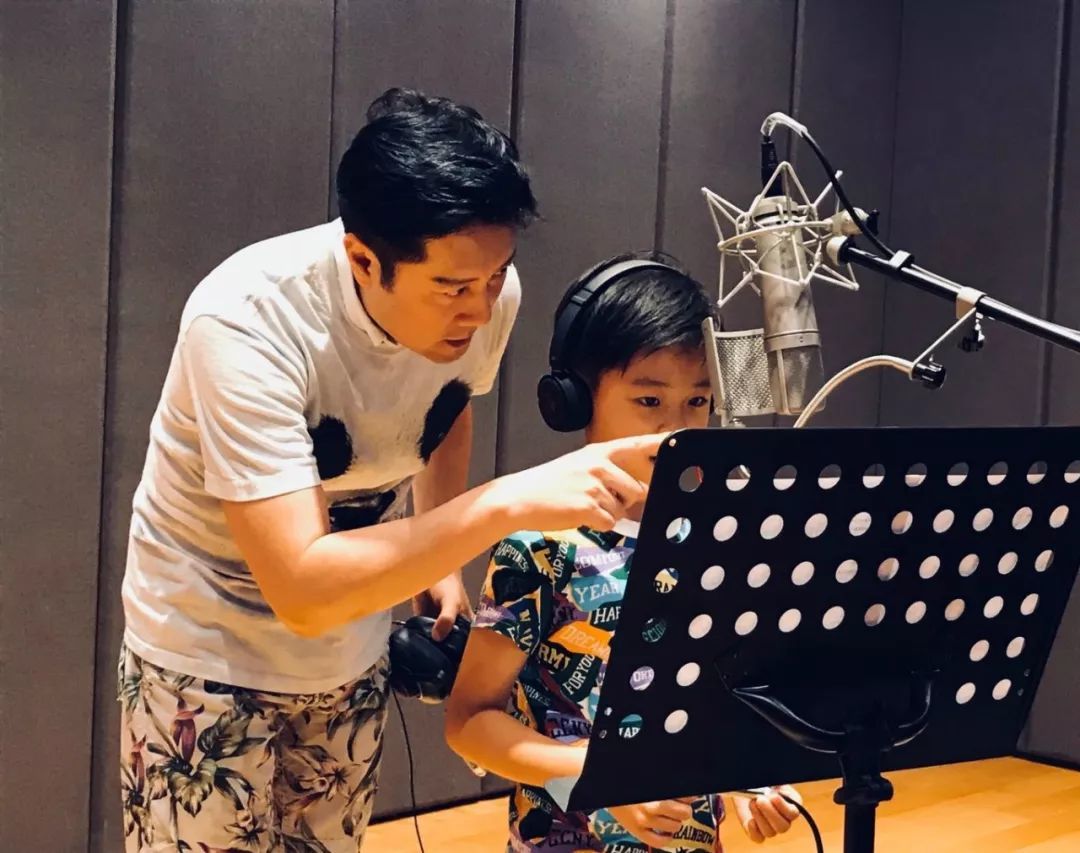
As a symbol of Chinese traditional culture, the Forbidden City has been baptized for thousands of years, carrying the heavy national spirit and cultural blood of the Chinese nation. This parent-child drama with the theme of the Forbidden City also hopes to bring the influence and enlightenment of traditional culture to the children in the form of entertaining and entertaining. Teacher Cai Guoqing, who has a deep love for traditional Chinese culture, also shared with you his insights and thoughts on the heavy Chinese civilization and the cultural guidance and education of young people.
"Chinese traditional culture does not need innovation
The original inheritance is very precious"
The famous communication scholar McLuhan once pointed out that with the rapid development of modern culture and media, the whole world has shrunk into a "global village", and the world culture has become more diverse. In such a cultural field, children in today's society are facing the attack of foreign cultures such as the Second Dimension, Europe, America, Japan and Korea, how can traditional Chinese culture break through the barriers of being "marginalized" and return to the hearts of children? In response to this concern, Mr. Cai Guoqing said that good culture is shared for the whole world, and we should not stop children from absorbing the essence of foreign culture just because we cherish traditional culture. "Children should have a cultural heart and a heart of universal harmony, but no matter how much our children like foreign culture, we must not forget that we are the descendants of Chinese culture. Our roots are in traditional Chinese culture."
As teacher Cai Guoqing said: "Chinese traditional culture does not need innovation, and the original inheritance is very precious." In the process of internationalization, we should not only be inclusive of all rivers, but also keep ourselves. So where is the basis for the inheritance of traditional Chinese culture? Teacher Cai pointed out, "The source of traditional culture lies in the Forbidden City."
"Chinese traditional culture is elite culture
The source of elite culture is in the Forbidden City"
The theme song of the parent-child drama "the little one in the Forbidden City" not only shows Cai's exquisite and profound musical attainments, but also reflects his personal complex of Chinese cultural tradition. In Teacher Cai's view, "The essence of traditional Chinese culture is in the Forbidden City, which was passed down by the emperors of the past. That is the place closest to the essence of culture. Therefore, parents should take their children to the Forbidden City and museums to feel the culture. The charm of the essence." Teacher Cai also pointed out, "The lyrics of this time, 'The Forbidden City lights up a lanter', which fits the cultural theme very well. The lamp lit by the Forbidden City is a lamp of cultural heritage."
In Mr. Cai Guoqing's small home, the furniture and objects on display are all simple and simple Chinese style. At ordinary times, he will let Qingqing sit in a circle chair and do his homework on Chinese style notes. Teacher Cai said, "I hope that children can feel the tension of elite culture inherited from the distant ancient times and from the source of culture in these objects with profound history in a subtle environment."
"Zero pay to join is a personal choice
The market needs to work well"
It is commendable that this time the theme song of the parent-child drama "The Little Dot in the Forbidden City" was sung, and Teacher Cai and Qingqing joined in completely zero pay to help children's art and culture. As a singing artist with both virtue and art, teacher Cai Guoqing's practice shows extremely precious personal feelings. "I was also born in a children's drama before. The reason why I chose to participate in the children's drama" The Little Dot in the Forbidden City "this time is also my personal reward for the traditional Chinese culture that nurtured me."
At the same time, regarding the current situation that there are still vacancies in the children's drama and children's music market, Teacher Cai said: "Parents and children should establish the awareness of paying for children's dramas and children's music." "My choice to join with zero pay is only my personal choice, because of my love for the art career I am engaged in, but this is only my personal behavior. To maintain the healthy operation of the market, love alone is not enough. There must be a sound market mechanism as a guarantee, so that more people will devote themselves to the creation of children's dramas and children's music."
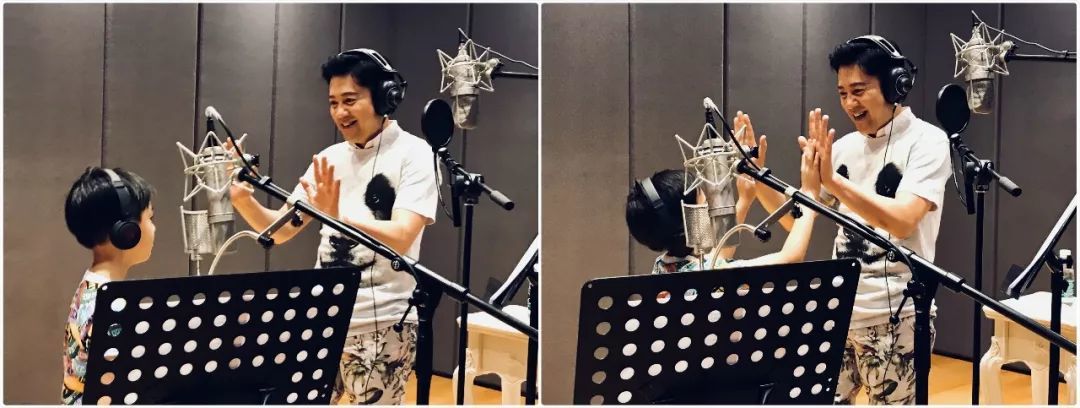
Respect and love for everyone, respect for every object around you, and respect for the passage of time. These are not only the precious qualities revealed by Teacher Cai Guoqing and his beloved son Qingqing, but also the "Little Dot in the Forbidden City". The parent-child drama of Xianyi wants to convey to us the spiritual core of Chinese traditional culture. As one of the blockbuster repertoires of this year's Poly Parent-Child Art Festival, the play will land at the Beijing Poly Theater on August 3 and 4. At the same time, during August 3-12, there will be "The Little Dot in the Forbidden City", "The Chamber of Energy", "Beethoven's Guqin Adventures", "The Adventures of the Time Kingdom of Doule Stage Drama" four parent-child plays meet with the audience during the festival, feel the historical and cultural charm.
In the cultural environment of "universal harmony", "harmony without difference" is particularly precious. "Different" requires not only cultural "tolerance", but also "keeping the original traditional culture." In this way, as the poet Holderlin said, "poetic dwelling on the earth."
Related News